
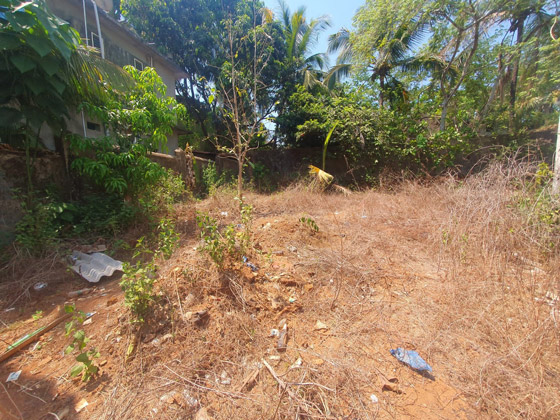
The dangerous land purchase is not always the obviously bad one.
Sometimes it is the beautiful plot in the right location with one important detail nobody verified.
The title may appear clear, but the access could be disputed. The land may be in a settlement zone, but the subdivision may still be incomplete. A waterfront parcel may look ideal for development but fall within Coastal Regulation Zone restrictions. A brochure may speak about future FAR or conversion possibilities that have not yet been approved.
That is why buying land in Goa requires a different kind of due diligence from buying a completed home.
At Linc Property, we believe the first question should never be, “What can this land become?” It should be, “What is this land legally and physically today?”
Before you buy land in Goa, these are ten things worth establishing clearly.
1. Who Actually Owns the Land?
Begin with the title.
Do not stop at the seller’s name on one document. The ownership history should be examined through the relevant registered deeds and supporting records to understand how the property reached its current owner.
A legal review should also look for mortgages, claims, disputes, co-ownership issues, succession concerns or other encumbrances that could affect transfer.
This is particularly important in Goa, where older family-held properties can sometimes involve multiple heirs or historical ownership changes.
A clean-looking plot is not the same thing as a legally clean transaction.
2. Do the Survey Records Match the Land You Are Being Shown?
The next question is physical.
Does the plot on the ground correspond with the survey number, area and boundaries appearing in the records?
Before buying a plot in Goa, compare the title documents with the relevant survey plan and land records. A professional site survey can also help establish whether boundary markers, road access and adjoining properties correspond with what is being represented.
This matters because a buyer should know exactly where the land begins and ends before paying for it.
A difference of a few metres can become a much larger issue once walls, access roads or buildings are planned.
3. Are Mutation and Partition Records Up to Date?
Mutation records should reflect relevant changes in ownership in the revenue records.
But mutation should not be confused with proof of title by itself.
It needs to be read alongside the registered ownership documents, survey records and the wider legal history of the property.
Partition is another important issue where a larger ancestral or jointly held property has been divided into smaller parcels. If the plot being sold is part of a larger holding, establish whether the subdivision and related records have been properly completed.
This distinction becomes particularly important when evaluating plots for sale in Goa that have been carved out from larger landholdings.
4. What Zone Is the Land Actually In?
Location tells you where the land is.
Zoning tells you what may be possible there.
Goa has different land-use classifications, and each comes with a different planning context. Settlement, orchard, institutional, commercial and other classifications cannot be treated as interchangeable simply because two plots sit close to each other.
This is one of the first things we examine when evaluating land at Linc Property.
Settlement Does Not Mean “Build Anything”
Even settlement land remains subject to applicable development regulations, access requirements, setbacks, FAR, coverage and approvals.
Likewise, orchard land should not be valued as though it were already residential merely because conversion may be discussed as a future possibility.
A buyer should always evaluate the land according to its current zoning first.
5. What Has Actually Been Approved?
Zoning is only one layer.
You should also establish whether the land has the required conversion status or Sanad where applicable, and whether any specific development approvals already exist.
This can materially change the starting point for a project.
For example, Linc Property’s 4,100 sq. m parcel in Chorao is full settlement land with approvals in place for a planned eight-villa luxury development. That puts it in a very different position from raw land where the buyer still needs to begin the approval process from an earlier stage.
The important question is not simply:
Can something eventually be built here?
It is:
What is approved today, and what would still require permission?
Never treat a proposed approval as though it has already been granted.
6. Are There CRZ or Other Development Restrictions?
Waterfront land naturally attracts attention in Goa, but proximity to the coast, river or other sensitive areas can bring additional restrictions.
Coastal Regulation Zone provisions can affect what is permitted on particular parcels and what approvals may be required.
Our 23,225 sq. m Chorao waterfront parcel is a useful example. Its Mandovi River frontage creates potential for specialised marine or waterfront uses, but any such development has to be assessed against the applicable CRZ and other statutory permissions.
The same principle applies more broadly.
Before a land purchase in Goa, establish whether the property is affected by CRZ, environmental considerations, slope, agricultural classifications or any other restriction relevant to the intended development.
A beautiful location does not override planning law.
7. What FAR Is Available Today?
FAR, or Floor Area Ratio, influences how much floor area may potentially be developed in relation to the plot.
But the number should always be read in context.
It depends on factors including zoning, permitted use, access and applicable planning regulations.
This becomes especially important when someone is selling a future possibility.
Consider our 2,640 sq. m Pernem parcel. Its present position includes 100% FAR, while mutation and partition processes are ongoing. There is also potential for a future C-1 conversion that could change the development proposition.
The important word is potential.
A buyer should evaluate the parcel using its present legally applicable position. Any future increase in FAR or change in zoning should only be factored into the development plan if and when it is formally approved.
That is a useful rule for any land for sale in Goa.
8. Is the Road Access Legal and Adequate?
A road appearing beside a plot on a site visit does not automatically answer the access question.
Establish:
- whether the access is legally recorded
- whether it is public or private
- whether a right of way is involved
- what the available road width is
- whether that width is adequate for the development you intend to undertake.
A private residence, a villa community, an institutional project and a commercial development may all have very different access requirements.
This is also why “close to the highway” is not enough information.
What matters is how the land legally connects to the road network.
9. What Infrastructure Actually Reaches the Site?
A plot may be attractively located but still require substantial work before it is ready for development.
Check the practical availability of:
- electricity
- water
- drainage
- sewage or septic solutions
- telecom connectivity
- storm-water management
- site access for construction.
Also understand the site’s levels and natural drainage, particularly in areas that experience heavy monsoon rainfall.
Infrastructure that exists “nearby” may not necessarily be available at the plot boundary or at a cost already accounted for in the purchase.
This is where a technical assessment can reveal costs that are easy to miss during an initial site visit.
10. Does the Plot Fit What You Actually Want to Build?
This is the question that brings everything else together.
There is no universally “good” parcel of land.
There is land that is suitable for a particular objective.
A residential developer, hospitality operator, institutional buyer, investor and someone looking for a private retreat may evaluate the same location very differently.
Our own portfolio demonstrates why.
A full-settlement parcel in Chorao with villa approvals presents one development path.
A mixed residential and institutional parcel at Bainguinim presents another.
Our Pernem land parcel has a different present planning position and future possibility.
Our Mopa parcel is currently orchard land, with a previous poultry-farm permission and a zonal-change application in progress. It should therefore be evaluated as orchard land today, not as though a future conversion has already occurred.
This is why we encourage buyers looking through plots for sale in Goa to begin with the intended use before comparing locations.
The right parcel is the one whose current legal, physical and planning position supports what you actually want to do with it.
Before You Pay a Token
Before making a meaningful financial commitment, ask to review the documents relevant to the specific parcel.
Depending on the property, these may include:
- title and ownership documents
- survey records and plans
- mutation and partition records
- zoning information
- Sanad or conversion documents where applicable
- existing development approvals
- road-access documentation
- CRZ or other regulatory status where relevant.
The documents should then be reviewed by the appropriate independent legal and technical professionals for that particular transaction.
A seller’s reputation can give you useful context.
It should never replace due diligence.
How Linc Property Approaches Land in Goa
At Linc Property, we do not believe every parcel should be sold with the same story.
A settlement plot, an orchard parcel, a CRZ waterfront property and land with development approvals represent very different opportunities. Their current zoning, access, approvals and limitations should be understood before future possibilities are discussed.
That is also why our land portfolio ranges across different scales and intended uses rather than presenting every property simply as another investment plot.
If you are exploring land for sale in Goa, start with what you intend to build, how much development flexibility you require and which approvals you are prepared to undertake.
Because the smartest way to approach buying land in Goa is not to fall in love with what a plot might become.
It is to understand exactly what you are buying first.
