
uying a villa in Goa is very different from choosing a place for a week-long holiday.
Once the property becomes a home, second residence or long-term family base, everyday questions begin to matter more than the brochure. How well does the house work during the monsoon? Is the location practical for an ordinary week? Can parents, children and visiting family use the space comfortably? What will you need to maintain when you are away? And is the developer clear about what is completed, under construction or still proposed?
That is why finding the best villa developer in Goa should begin with evidence rather than adjectives.
A good developer should help you understand not only the home you are buying, but how that home is likely to work once you begin using it.
Start With How You Intend to Use the Villa
Before comparing developers, define the role the property will play in your life.
A primary residence has different requirements from a second home. A couple returning to Goa for part of the year may prioritise something different from a household where parents, children and grandparents will live together. Buyers who regularly host family may need additional bedrooms and outdoor space, while those spending long periods away may care more about community management and upkeep.
This is one reason bedroom count alone is not enough when comparing villas for sale in Goa.
Ask yourself:
- Who will use the home most often?
- Will it be occupied throughout the year or seasonally?
- How frequently will family and friends stay?
- Do you need space for working from home?
- How much outdoor space are you prepared to maintain?
- Would you prefer an independent villa or a home within a gated community?
- How important are shared facilities and community management?
These answers immediately make the developer comparison more useful because you are no longer looking for the “best” project in the abstract. You are looking for one that fits the way you intend to live.
Check How the Villa Responds to Goa, Not Just How It Looks
Architectural renders are useful for understanding design intent, but they cannot tell you everything about living in Goa through heat, humidity and monsoon rain.
When assessing a villa developer in Goa, look beyond finishes and styling. Ask how ventilation, shade, balconies, terraces, drainage, landscaping and water management have been considered.
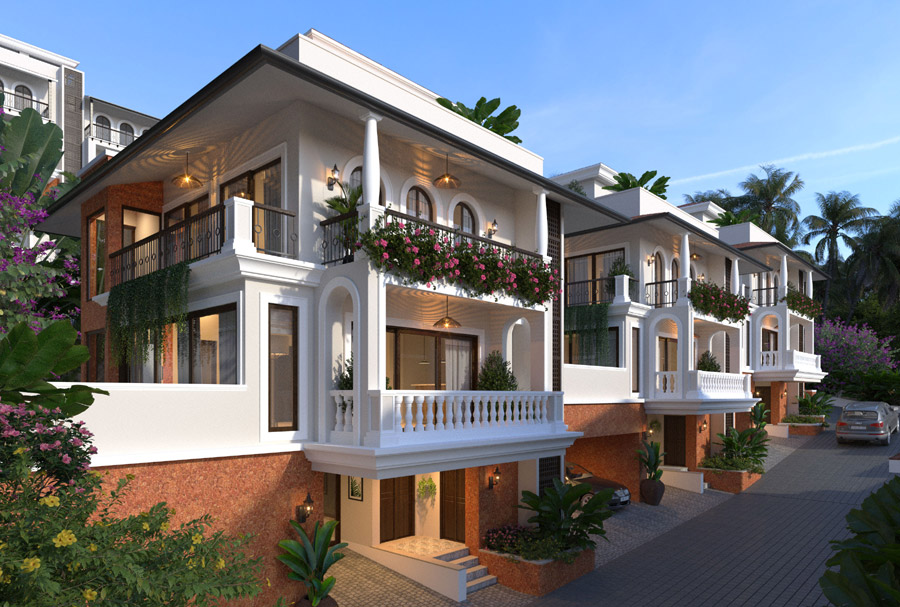
At Raghavan Green Valley in Socorro, for example, the current project information identifies passive-cooling villa design, deep balconies, private gardens, private terraces, groundwater recharging and landscaped outdoor areas. These are more meaningful ownership details than simply describing the villas as “luxurious”.
The important question is not whether a developer uses words such as sustainable or climate-conscious.
It is whether you can see how those choices have been translated into the property.
What to Inspect During a Site Visit
Walk through the villa as though you were already living there.
Check where direct afternoon sun enters the home, how air moves through living and bedroom spaces, how exposed balconies and terraces are, where rainwater is likely to move and how private outdoor areas will need to be maintained.
If possible, revisit the neighbourhood or development in different weather conditions.
A home should make sense in August as well as December.
Judge the Location by Everyday Life
Goa buyers can easily overvalue proximity to beaches and undervalue the routes they will actually use every week.
If you are planning to buy a villa in Goa for regular use, inspect the neighbourhood as a resident rather than a visitor.
Consider access to supermarkets, healthcare, schools, work routes, Panaji, Mapusa and the places your household is likely to use frequently. Drive those routes yourself rather than depending entirely on advertised travel times.
Raghavan Green Valley illustrates this kind of location decision well. It is in Socorro, Porvorim, with the project page positioning Mapusa, Panaji and Calangute within the wider surrounding network. The appeal here is not isolation; it is the ability to live in a greener residential environment while remaining connected to established North Goa centres.
Linc Acacia represents a different decision. The proposed five-bedroom development is planned for Chorao Island, where the quieter island setting and access pattern will naturally suit a different buyer.
Neither location is automatically “better”.
The more useful question is which location works for your household.
Understand What Stage the Project Is Actually At
This is one of the most important checks when comparing real estate developers in Goa.
A completed villa, an under-construction home and a proposed development should not be evaluated in the same way.
With a completed home, you can inspect much of what you are purchasing. An under-construction property requires closer attention to progress, payment stages and the confirmed handover position. A proposed project requires even greater clarity around approved plans, development stage and what remains subject to execution.
Linc Acacia is currently presented by Linc as a proposed, not-yet-started development on Chorao Island. Its planned format includes eight five-bedroom villas with private pools, gardens and terraces, along with proposed shared facilities. Those features should be understood as part of the planned development rather than as completed amenities.
The same discipline should apply to every project you inspect.
Do not assume that the number of villas in a development equals the number currently available for sale, and do not treat a render as evidence of a completed home.
Compare the Home and the Community Around It
Villa ownership is not only about the space inside your front door.
The relationship between private and shared space can have a large effect on how the property works.
Some buyers want a completely independent home. Others prefer the privacy of a villa within a gated development where security, common areas and shared facilities are managed at community level.
At Raghavan Green Valley, the current offering includes three- and four-bedroom row and independent villa formats, with private gardens and terraces alongside shared facilities including a swimming pool, community spaces and recreation.
That distinction matters.
A shared swimming pool is not the same ownership proposition as maintaining a private one. A private garden gives you more control over outdoor space, but also brings upkeep. Community facilities can add convenience, but they also come with shared responsibilities and recurring costs that should be understood before purchase.
When comparing villas for sale in Goa, ask what belongs exclusively to the villa, what belongs to the development and what you will be responsible for maintaining.
Check Documentation, Costs and Responsibilities Before You Commit
A premium price does not replace due diligence.
Before purchasing, buyers should independently review the title and ownership records, sanctioned plans, applicable approvals, RERA information where required, agreement terms and the specific documentation relating to the villa being considered.
It is equally important to understand the complete purchase cost.
The advertised villa price may not represent the final amount payable once taxes, statutory charges or other transaction-related costs are included. Ask the developer for a unit-specific cost sheet rather than working from a headline figure alone.
You should also clarify the ongoing side of ownership:
- common-area or community charges;
- private garden or pool maintenance where applicable;
- security and shared-service responsibilities;
- power backup coverage;
- property upkeep when the home is vacant;
- parking and access arrangements;
- any customisation included or separately chargeable.
A transparent developer should make it easier to ask these questions, not discourage them.
Look at the Developer’s Track Record, Not Only the Current Sales Pitch
A developer’s newest project tells you what it intends to build. Completed work tells you more about what it has already delivered.
Linc Property has operated from Goa since 2006 and has worked across residential, commercial and other property formats. Its current portfolio ranges from villas and apartments to land and commercial premises.
For a buyer, however, the useful part of that history is not the number of years alone.
Visit completed developments where possible. Look at how buildings and common areas have aged. Ask existing owners about communication, maintenance and their ownership experience. Review the developer’s current projects separately rather than assuming every development offers the same product or standard of specification.
The Linc Property portfolio itself illustrates why this matters. Raghavan Green Valley serves buyers considering three- or four-bedroom villa living in connected Socorro, while proposed Linc Acacia is positioned around a larger five-bedroom island-home format on Chorao.
Different homes are designed for different buyers.
Choosing the Right Villa Developer in Goa Comes Down to Fit
The best villa developer in Goa is not necessarily the one with the most dramatic pool, the largest villa or the strongest lifestyle language.
It is the developer whose home, location, project stage and ownership structure stand up to the questions that matter to you.
Before you decide, inspect the actual property or approved plans, understand the neighbourhood, review the documentation, ask about complete costs and think carefully about how your family will use the home through the year.
At Linc Property, that is how we believe a villa decision should be approached.
If you are comparing real estate developers in Goa, explore the current Linc portfolio, visit the relevant development and speak with our team about the configuration, current availability, project stage and documentation for the specific home you are considering.
Because the right villa should work not only when you first walk through it, but long after Goa stops feeling like a holiday.
